Blog
EPDM vs EVA: Understanding the Difference Between Rubber and Foam Components
Compare EPDM rubber and EVA foam for sealing, cushioning, insulation and custom components. Learn when each material may be suitable.
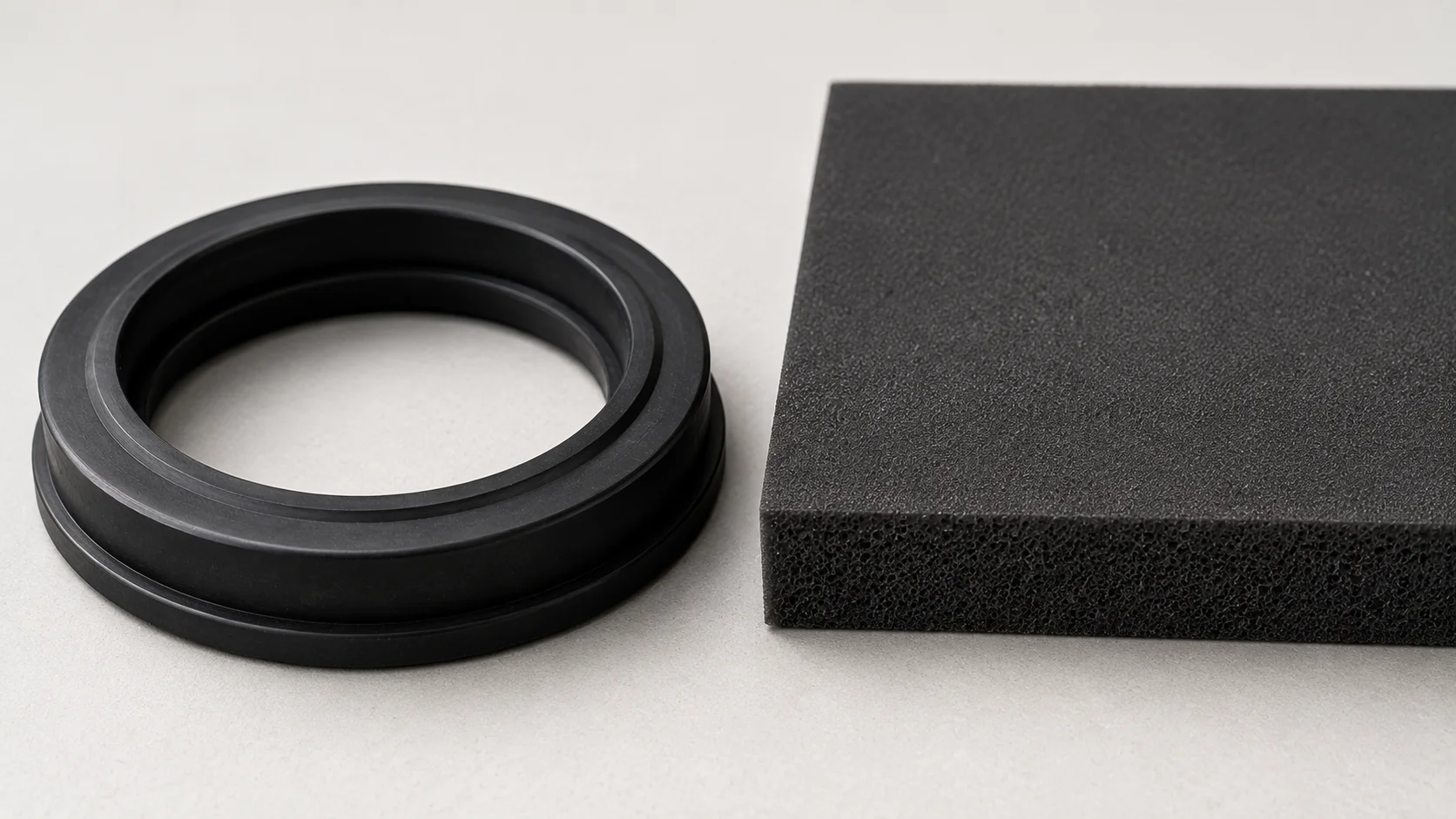
EPDM rubber and EVA foam are both widely used materials for industrial and automotive components, but they serve different purposes.
Understanding their basic characteristics helps engineers and purchasing teams choose a material that fits the application’s requirements.
What Is EPDM?
EPDM is a synthetic rubber commonly used where flexibility, sealing and resistance to outdoor environmental conditions are important.
EPDM can be supplied as sheets, profiles, gaskets, flaps and other custom components.
Typical EPDM applications
- Rubber gaskets
- Sealing components
- Rubber profiles
- Flaps and pads
- Automotive components
- Industrial sealing applications
Its rubber-like flexibility makes EPDM suitable for applications where a resilient sealing component is required.
What Is EVA Foam?
EVA is a lightweight closed-cell foam material.
Unlike EPDM rubber, EVA is a foam and is generally selected where cushioning, lightweight protection, insulation or custom foam components are required.
Typical EVA applications
- Cushioning pads
- Protective components
- Gaskets
- Insulation components
- Packaging inserts
- Die-cut foam parts
EPDM vs EVA: Basic Comparison
| Requirement | EPDM Rubber | EVA Foam |
|---|---|---|
| Material type | Rubber | Closed-cell foam |
| Main characteristics | Flexible and resilient | Lightweight and cushioning |
| Common form | Sheets, profiles, gaskets | Sheets and custom components |
| Sealing applications | Strong fit for rubber sealing | Useful for foam-based sealing |
| Cushioning | Limited compared with foam | Common application |
| Weight | Generally heavier | Lightweight |
| Conversion | Die-cutting, profiling and fabrication | Die-cutting, lamination and fabrication |
This table is a general material comparison. The suitability of a specific grade depends on the actual application.
Which Material Should You Choose?
The answer depends on what the component needs to do.
Choose EPDM when the primary requirement is a flexible rubber sealing or profile component.
Consider EVA when the requirement focuses more on lightweight cushioning, protection, insulation or foam-based sealing.
In some assemblies, both materials may be used together.
Custom Components Matter
Material selection alone does not guarantee a successful component.
The finished part must also match the customer’s dimensions, shape, assembly method and application requirements.
Parul Plast manufactures both foam and rubber components and can develop parts around customer drawings, samples and specifications.
Conclusion
EPDM and EVA are not direct substitutes in every application. They are different material families with different characteristics.
The right decision starts with understanding the function of the component and then selecting the material and manufacturing process accordingly.
Related: EPDM rubber products · Rubber profiles · EVA foam products