Blog
PU vs EVA vs XLPE Foam: Understanding the Right Material for Your Application
Understand the differences between PU, EVA and XLPE foam and how material selection affects cushioning, sealing, insulation and custom foam components.
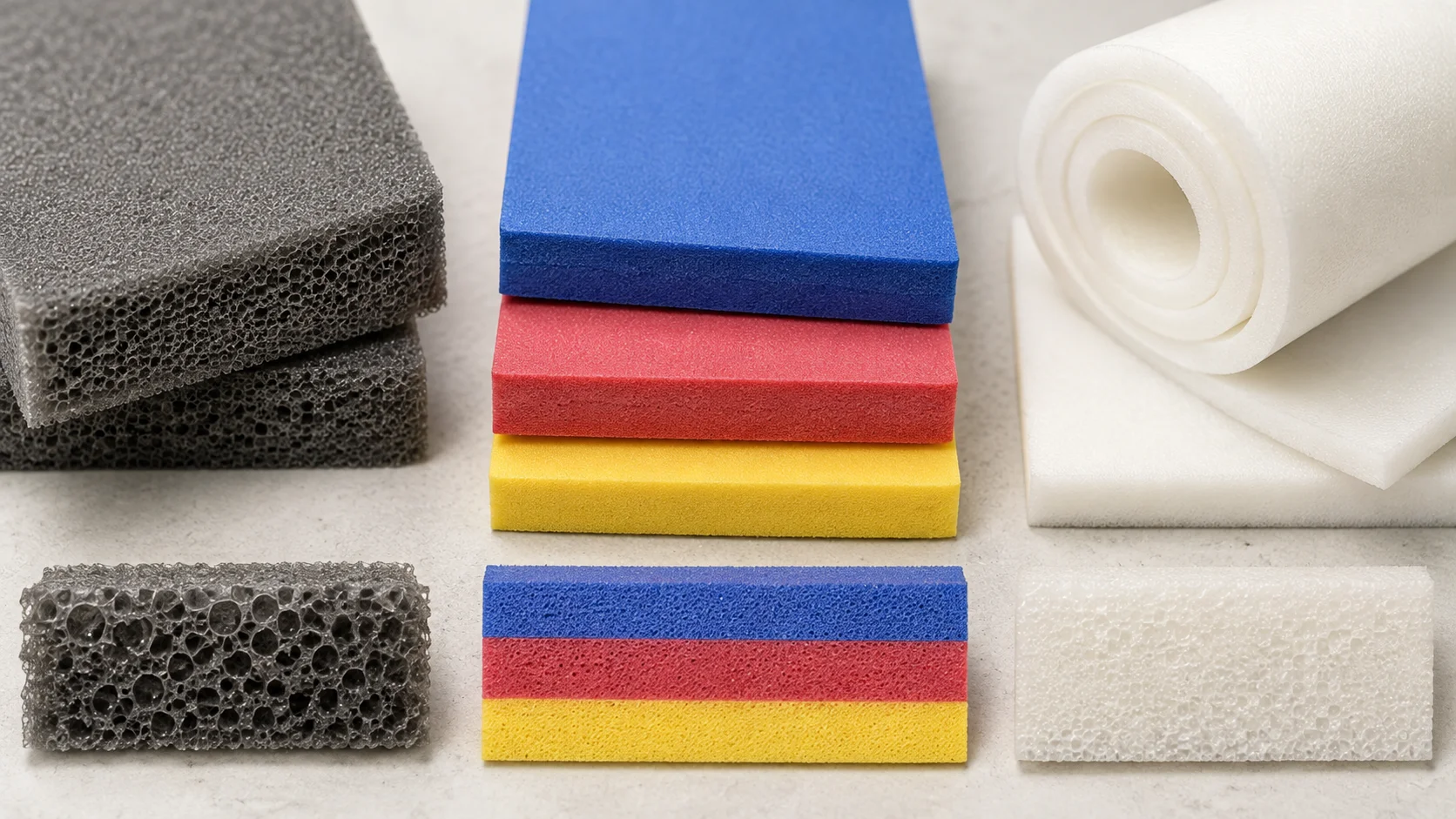
Foam is used across automotive, industrial, packaging, filtration and many other applications because it can provide cushioning, insulation, sealing and protection in a lightweight format.
But not every foam performs the same way. PU foam, EVA foam and XLPE foam each have different structures and characteristics, making material selection an important part of component development.
PU Foam
PU foam is a versatile material available in flexible foam forms and can be converted into sheets, blocks and custom-shaped components.
It is commonly considered when cushioning, comfort, sound absorption or general protective properties are required.
At Parul Plast, PU foam can be converted into custom components according to the required shape and application.
Typical applications
- Cushioning components
- Protective components
- Interior components
- Sealing and insulation applications
- Custom die-cut parts
- Packaging components
EVA Foam
EVA foam is a closed-cell foam known for its lightweight structure and flexibility.
It can be supplied in sheets and converted into custom shapes using die-cutting and other conversion processes.
Typical applications
- Gaskets and seals
- Protective pads
- Cushioning components
- Automotive components
- Packaging inserts
- Custom die-cut components
EVA is particularly useful when a lightweight closed-cell foam solution is required.
XLPE Foam
XLPE, or cross-linked polyethylene foam, has a fine closed-cell structure and is commonly selected for applications requiring cushioning, insulation and protection.
The material can be converted into sheets and custom-shaped components.
Typical applications
- Thermal insulation
- Protective packaging
- Cushioning
- Sealing components
- Automotive components
- Industrial components
How Do You Choose?
The correct material depends on the component’s application rather than simply choosing the most expensive or most advanced foam.
Consider:
- What function does the component need to perform?
- Does it require cushioning, sealing or insulation?
- What shape and dimensions are required?
- Will the component be die-cut, laminated or fabricated?
- What environmental conditions will it experience?
- What production quantity is required?
From Material Selection to Finished Component
Material selection is only one part of the process. The material must also be converted accurately into the required component.
Parul Plast supports foam conversion and custom component manufacturing, including die-cutting, lamination, bonding and fabrication.
Components can be developed from customer drawings, samples or specifications.
Conclusion
PU, EVA and XLPE foam each have useful characteristics, but the best choice depends on the application’s requirements.
A good manufacturing partner should help evaluate the application, select a suitable material and convert it into a repeatable finished component.
If you have a drawing, sample or foam-component requirement, Parul Plast can review the requirement and suggest a suitable manufacturing approach.
Related: EVA foam products · XLPE foam products · PU foam products